Dreame H12 Pro Review: Capable Cleaning, but Durability Is the Question for Hard-Floor Pet Homes
By VacuumWiz Editorial Team · Published Oct 12, 2026 · Updated Oct 13, 2026 · 8 min read
Cross-checked tester runs and owner feedback on the Dreame H12 Pro: capable hard-floor cleaning, a strict dirty-tank routine, and a roller drive to watch.
VacuumWiz Score
5.3/ 10
Dreame H12 Pro
Four dimensions
Cleaning performance6
Ease of use5
Everyday upkeep6
Long-haul reliability4
Verdict
This wet-dry vacuum earns its keep on hard floors: it vacuums and mops together, and owners with kids and pets confirm it cuts daily cleaning time meaningfully. The trade-off is upkeep discipline, because the dirty water tank turns foul fast if you let it sit, and the one durability report we could verify describes a roller drive failure followed by a drawn-out, frustrating repair process.
For a hard-floor home with kids or pets, the Dreame H12 Pro makes a simple promise: vacuum and wash in one pass, then clean itself on the dock. Independent testers and owners ran this wet-dry vacuum through the daily messes of real kitchens and living rooms, and their reports agree on the outline: capable everyday cleaning, a dirty tank that sets a strict routine, and durability evidence that is thin and not reassuring. It also will not reach under low furniture or finish every corner, so the edges of the job stay on you.
Verified unit
Dreame H12 Pro
Wet-Dry Vacuums
A household with hard floors and daily kid or pet messes that wants one machine to vacuum and mop and will rinse the dirty tank after every session.
As an Amazon Associate, we earn from qualifying purchases — at no extra cost to you. Learn more
Works well
The self-propelled glide and cordless design make whole-floor sessions easy on the back, with owners reporting enough battery to finish a full downstairs or a small home on one charge.
The dock runs a self-cleaning cycle with hot-air drying, which owners credit with keeping the roller from smelling between uses.
Watch out
The dirty water tank demands immediate attention: owners report a sewage-like smell if it sits even a few days, and one suggests a spoonful of white vinegar after emptying to keep bacteria in check.
One owner reports the roller stopped turning and describes a repair process involving broken shipping labels, disconnected calls, and a machine that came back still not working. A single report, but the only durability evidence on file, so the roller drive is the failure point to watch.
The self-cleaning cycle is loud for the minute or so it runs, which matters if you clean after kids are asleep.
It does not recline far enough for low, deep spaces, and tilting it near horizontal can splash dirty tank water into the upper air filter and clog it.
One-Pass Cleaning on Hard Floors

The advertising version of this machine clears a sauced-up floor in one dramatic pass, and testers are blunt about that gap. One who ran it on a floor that had gone a week without cleaning needed three or four back-and-forth passes, and the cross-checked verdict from tester runs is that cleaning is passable, closer to a good mop than to magic. On the fresh daily messes a pet home produces, that is usually enough, because the machine vacuums and washes at the same time and owners report it cuts daily cleaning time meaningfully. Dried and sticky spots are where the limit shows, and one tester found the floor behind the head wetter than expected, with water marks heaviest where the machine had paused.
Three modes cover the daily range, including an auto mode that adjusts suction and water output on its own and a dedicated suction mode meant for standing water. Spilled liquid does come up, but a visible film of water stays behind the head, so freshly washed tile wants a no-shoes window before anyone walks through. That behavior is normal for this form factor, yet it is worth knowing if you expected the floor to come up dry.
Edges, Corners, and Low Furniture
The roller is built to hug both edges at once, which the listing pitches as corner-to-corner coverage. Tester runs tell a narrower story: along open baseboards the dual-edge head works, but one tester still found residue at right-angle corners behind doors and at small thresholds, and even the edge runs left some debris behind. Low furniture is the harder limit, because the body does not recline far enough for deep spaces, and owners warn that tipping it close to horizontal can splash dirty water into the upper air filter and clog it. Under a tall bed one tester got the head partway in and called the result barely acceptable, and the spots it cannot reach simply want a second tool.
Handling, Noise, and Runtime
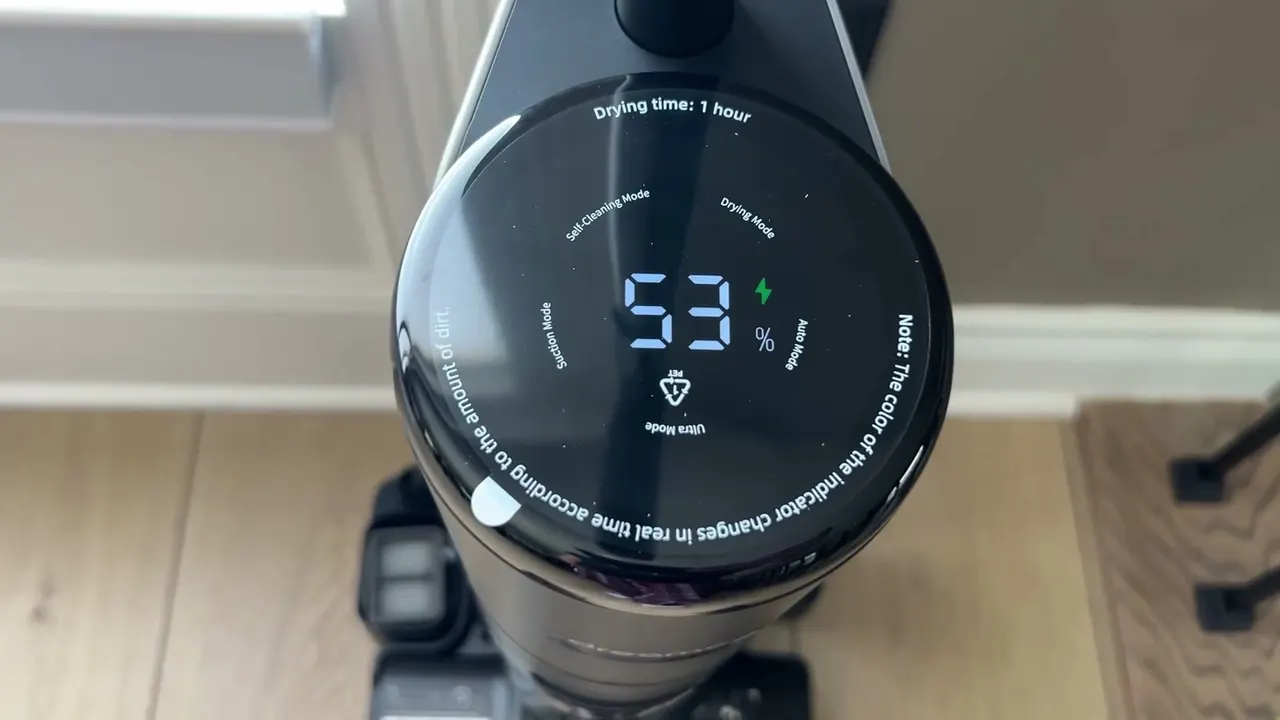
At roughly 5 kg before water goes in, the H12 Pro is not a light machine, and one tester noticed the weight first just getting it out of the box. On the floor the picture improves: the self-propelled glide pulls it forward, and owners credit that pull with making whole-floor sessions easy on the back. There is no powered assist in reverse, so pulling the machine back toward you is when you feel the kilograms. A round display on the body shows which mode is active and how much charge is left.
Mode and charge level stay visible on the dial while you work.
Noise is worth planning around. Even write-ups that praise the machine concede it is not quiet, one tester was startled by a loud voice prompt the first time the machine docked, and owners describe the self-clean cycle as loud for the minute or so it runs, which matters if you clean after the kids are asleep. Runtime draws fewer complaints: owners report finishing a full downstairs or a small home on one charge, though larger multi-room homes may need a mid-clean recharge.
One charge is enough for a full downstairs in owner runs.
Tanks, Roller, and Self-Cleaning
The clean tank is rated at 900 mL and the dirty tank at 700 mL, and in practice the dirty side sets the pace: the machine prompts when it wants emptying, and on bigger sessions that prompt can arrive mid-job. What owners are adamant about is the aftercare. Dirty water left sitting in the tank turns foul within days, with one owner describing a sewage-like smell, and the standing advice is to empty and rinse right after every session. One owner adds a spoonful of white vinegar after emptying to keep bacteria in check, since disinfectants are not recommended for the machine.
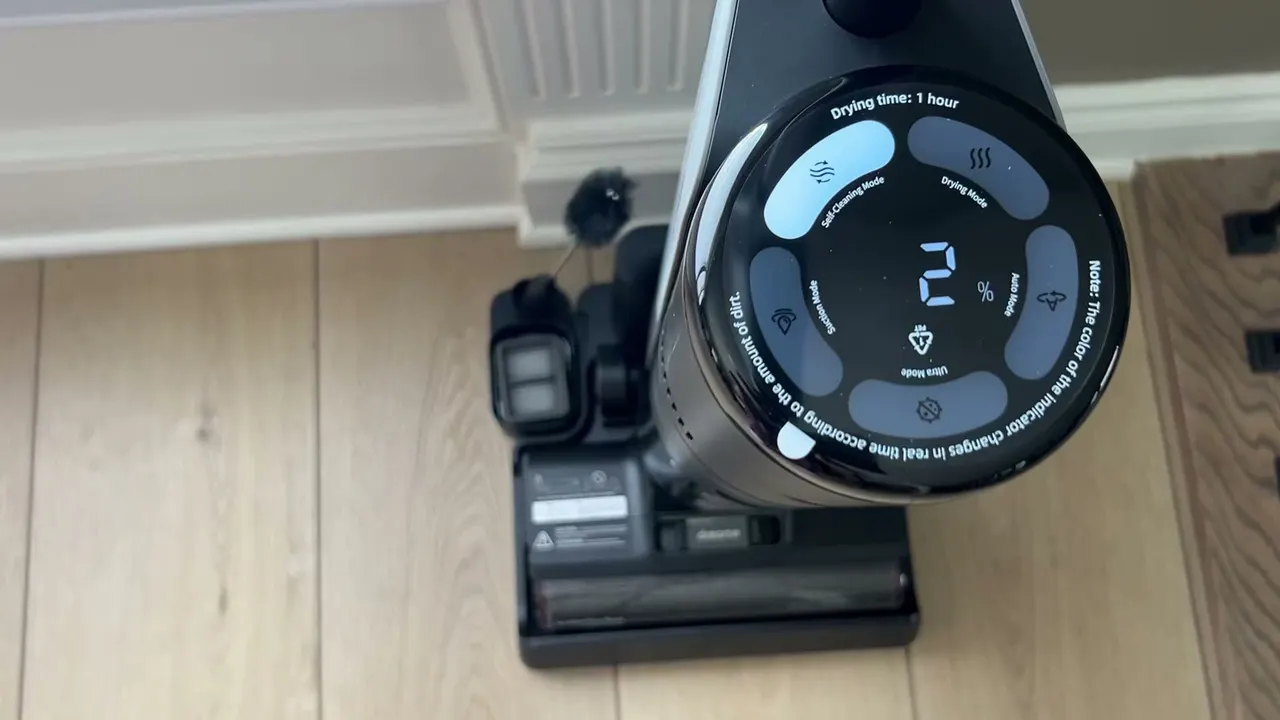

The dock handles the roller. Docking starts a self-clean cycle that flushes the roller and tubing, spin-dries it, and finishes with hot air, and owners credit the hot-air drying with keeping the roller from smelling between uses. A forward-and-reverse rotation during cleaning is said to keep hair from winding onto the roller in the first place. None of this removes the tank routine above, and one setup note from a first-time user is worth passing on: the clean tank sits at the back of the machine, and pouring solution into the wrong tank is an easy first-day mistake.
The self-clean cycle runs on the dock, with progress on the dial.The dock washes and hot-air dries the roller, visible low in the base.
Evidence log
Field captures — Dreame H12 Pro
5 frames
FIG. 01The dark upright on the right is the H12 Pro, parked next to the owner's stick vacuum.
FIG. 02Owners credit the dock's hot-air dry with keeping the roller odor-free between uses.
FIG. 03One pass vacuums and washes at once, and owners say it cuts daily cleaning time meaningfully.
FIG. 05The aftercare owners insist on: clumps like this have to come out of the tank after every session.
The Run Log
Scenario
What testers saw
Fresh daily messes on hard floors
Vacuumed and washed in one pass; owners report daily cleaning got shorter
A floor left alone for a week
One tester needed three or four back-and-forth passes
Spilled liquid and standing water
The suction mode picks it up; a film of water stays behind the head
Open baseboard runs
The dual-edge head works along both sides of a wall run
Corners, thresholds, and behind doors
One tester still found residue left behind
Under a tall bed
The head reached partway; the result was barely acceptable
Docking after a run
The roller came out flushed and hot-air dried; the cycle is loud while it runs
Dirty tank left sitting
Owners report a foul smell within days; rinse after every session
Rows follow the order of the sections above.
Who Should Skip It
Best for: a hard-floor household with daily kid or pet messes, kibble scatter, splashed water bowls, muddy prints, that wants one machine to vacuum and wash and will rinse the dirty tank after every session. We would skip it if you need to reach under low furniture, if crisp corners matter to you, or if you know the tank will sit unwashed, because the odor starts there. Among the wet-dry machines we have cross-checked so far, this one sits at the low end of the range, held there by durability rather than cleaning. If your floors are mostly carpet, a cordless stick is the right form factor instead, and if you would rather not push anything at all, a robot that mops on a schedule covers hard floors with less daily involvement. For a different take on the same form factor, our other wet-dry vacuum review covers a machine with the same one-pass promise and its own tank quirks.
The durability file is thin, and what it contains is not comforting, which is exactly the kind of evidence our verification process refuses to round up. One owner reports the roller drive stopping altogether, followed by a repair saga of broken shipping labels, dropped calls, and a machine that came back still not working; it is a single report, but it is the only durability evidence on file, so the roller drive is the failure point to watch. Separately, a repair shop that works on these machines identifies a charging fault as a common failure on this model, and warns that opening the body means fighting a stubborn top cover and several thin internal wires that are easy to pinch and fatal to the machine if broken. None of this proves every unit fails. It does mean the known weak points are the roller drive and the charging circuit, and long-haul reliability, not cleaning, is what holds this machine's score down.
Frequently Asked Questions
How often does the dirty water tank need emptying?
The dirty tank is rated at 700 mL, and the machine prompts when it wants emptying, which can arrive mid-job on bigger sessions. Plan on emptying and rinsing it right after every run, because owners report a foul, sewage-like odor if dirty water sits in the tank for even a few days.
Does the self-cleaning cycle replace hand rinsing?
Only partly. The dock flushes the roller and tubing, spin-dries the roller, and finishes with hot air, and owners credit that drying with keeping the roller odor-free between uses. The dirty water tank is still on you after every session, and the cycle itself is loud for the minute or so it runs.
How close does it clean to baseboards and corners?
The dual-edge roller works along open baseboard runs, but tester runs still found residue at right-angle corners, behind doors, and at small thresholds. If crisp corners are a priority, plan on finishing them by hand.
Is the Dreame H12 Pro heavy to push around?
It weighs roughly 5 kg before the tanks are filled, so carrying it, especially with water in, is the chore. On the floor the self-propelled glide pulls it forward and owners find whole-floor sessions easy on the back, but there is no powered assist in reverse, so backward pulls are where you feel the weight.
Does it need a branded cleaning solution?
No. The sterilization mode electrolyzes plain water, so it asks for no extra cleaning agent, and owners note that disinfectants are not recommended for the machine. One owner adds a spoonful of white vinegar to the empty dirty tank to keep bacteria in check.