Dreame X50 Ultra Review: Threshold Climbing and Strong Pickup for Multi-Level Homes, but the Mechanism Is Unproven
By VacuumWiz Editorial Team · Published Oct 12, 2026 · Updated Oct 13, 2026 · 10 min read
Cross-checked tester runs on the Dreame X50 Ultra: threshold climbing, low-clearance reach, and strong pickup, weighed against a mechanism with no wear record.
VacuumWiz Score
8.3/ 10
Dreame X50 Ultra
Four dimensions
Cleaning performance9
Ease of use8
Everyday upkeep8
Long-haul reliability6
Verified configuration
Suction
20000 Pa
Verdict
Independent tester reports confirm the two headline mechanisms working on real floors: the retractable legs crossed thresholds including a roughly 2 cm bathroom sill, and the LiDAR turret lowers itself so the robot gets under beds and low cabinets. What the sources we track do not document is long-term behavior, so a buyer is paying for a mechanically complex design whose wear pattern is still unproven.
Most robot vacuums treat a raised doorway threshold as the end of the map, and the dust under a low bed stays there until someone moves the furniture. Testers running the Dreame X50 Ultra in multi-level homes watched it clear both of those lines, and their reports are why its Cleaning performance score sits at 9 out of 10, the strongest of its four dimension scores. What the same reports cannot settle is how the hardware behind those tricks ages, because the retractable legs and the self-lowering LiDAR turret are new mechanisms with no long-term wear record. The cleaning is not the question with this robot; the mechanism is.
Verified unit
Dreame X50 Ultra
Robot Vacuums
A multi-level home with tall thresholds and low-clearance furniture where a standard robot keeps getting stuck; testers report both the climbing legs and the turret-lowering navigation working on real floors. Long-term wear on the mechanism is not documented in the sources we track, so buyers who want a proven durability track record should weigh that gap.
As an Amazon Associate, we earn from qualifying purchases — at no extra cost to you. Learn more
Works well
The listing describes robotic retractable legs rated to clear thresholds and door tracks up to 2.36 in, a capability that, if it holds up in real homes, directly addresses the multi-level room problem that stops most robot vacuums.
A lowered profile of 3.5 in would let it reach under sofas and low furniture where most robots with raised sensor towers cannot go.
The DuoBrush anti-tangle system targets long hair up to 11.8 in, which is the specific failure point pet owners and long-haired households hit with single-roller robots.
Watch out
Durability is a complete unknown: there is no wear pattern data on the retractable leg mechanism, the brush system, or the battery, which matters more here because the design has more moving parts than a standard robot.
Thresholds and Low Furniture

The headline hardware is a pair of retractable legs, which the US listing bills as the answer to door tracks and thresholds taller than most robots attempt. In tester homes the mechanism cleared the crossings that stop ordinary robots: one tester's X50 Ultra rode over a bathroom threshold of about 2 cm without hesitation, and another recognized the raised track of a sliding balcony door, lifted its chassis, and crossed a spot where that household's previous robots had always failed. These are corroborated observations across independent runs, not a single demo.
Threshold crossings that stop ordinary robots are no problem here; the robot is mid-climb over the sill at center.
The second mechanism is a LiDAR turret that drops into the body when the robot detects low furniture, so it can flatten itself where raised-turret robots cannot go. Testers watched it slide under beds, cabinets, a low cot, and a wheeled serving cart, and one described the robot mapping a low-clearance area from outside, finishing the regular rooms, then returning with the turret lowered to clean inside. For homes where the worst dust lines live under furniture, that behavior covers ground most raised-turret robots never reach.
A retracted turret lets it reach dust most robots never touch; here it sits fully beneath a low sofa.
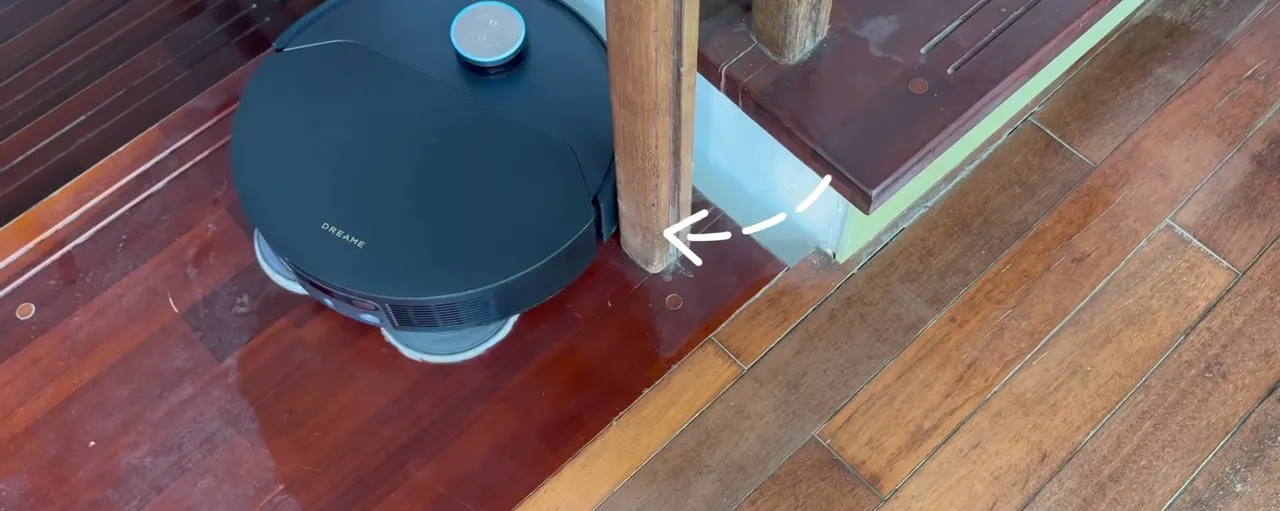
The honest limit sits at the taller end. In one tester's deliberate obstacle runs, the robot gave up on a barrier about 4 cm tall but only 1 cm wide, retreating after trying, and it declined to attempt a 5 cm block at all. Treat the climbing legs as hardware for household thresholds and door tracks, not for stairs or tall steps, and treat the tallest claimed figures as unverified.
Pickup and Hair
The US listing rates suction at 20,000 Pa, and testers consistently found pickup stronger than their daily messes required. Across independent runs it handled dust, hair, and small particles on hard floors and rugs, and one tester noted the suction was already more than enough for the crumbs and grit around dining tables and plant stands. Another set it to run along the direction of old floorboards and watched it pull dust out of gaps wide enough to collect it. None of these runs produced a complaint about everyday pickup.
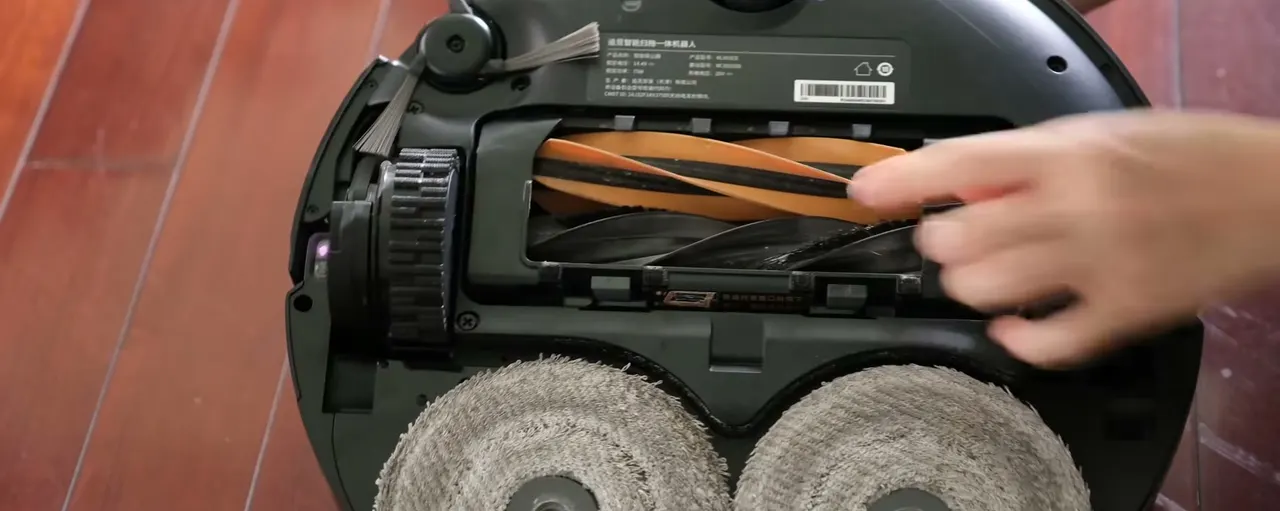
The anti-tangle system is the part pet owners and long-haired households should care about. The listing describes a dual roller, one rubber and one bristle, built to route long hair into the airflow instead of wrapping, and the tester evidence points the same way: after a week of runs in a bedroom with heavy hair shedding, one tester found no hair wrapped on the roller at all. In a deliberate check with colored threads, the strands traveled along the conical brush angle straight into the suction inlet instead of winding around the roller.
A week of bedroom runs left nothing wrapped; the roller at center is clean.
Rugs get special handling. One tester set a custom sequence in the app so the robot cleans the carpet first each run, and watched it drive back to the dock, detach its mop pads, head out for the carpet, and reattach the pads afterward. That routine keeps damp pads off rug fibers without any owner involvement.
Mopping and Edges
Mopping holds up in the sources' demonstrations. When the robot finds a particularly dirty spot mid-run, testers report it going back for a second pass on its own, and dried kitchen stains like soy sauce and ketchup came up in mop mode. The listing also describes a spill response: detect a large liquid spill, lift the side brush, and switch to mop-only until the spill is wiped. Anything heavier than that, a sticky pan spill or a week-old splash, is still wet-dry vacuum territory.
Edge work is where the X50 Ultra separated itself in tester homes. Along walls it leaves a gap of about 1 mm, and at low gaps under furniture it twists its rear to push the mop pad inside, wiping the strip most round robots leave dusty. One tester reported the lines along planter edges, walls, and a dining table base coming out completely clean.
Edge reach goes past the body shell; the mop pad at upper left is extended against the baseboard.
Two caveats belong here. Around dense clusters of table and chair legs, one tester found the sensors misjudging clearances, so the robot could not clean fully into every corner. And because the pad is a conventional static design, one tester saw it drag grime back onto already-clean floors after several rooms, with dried food residue needing more than one pass. Mid-run returns to the dock for a pad wash, which the robot does on its own, are what keep that from compounding.
Dock Life and Upkeep
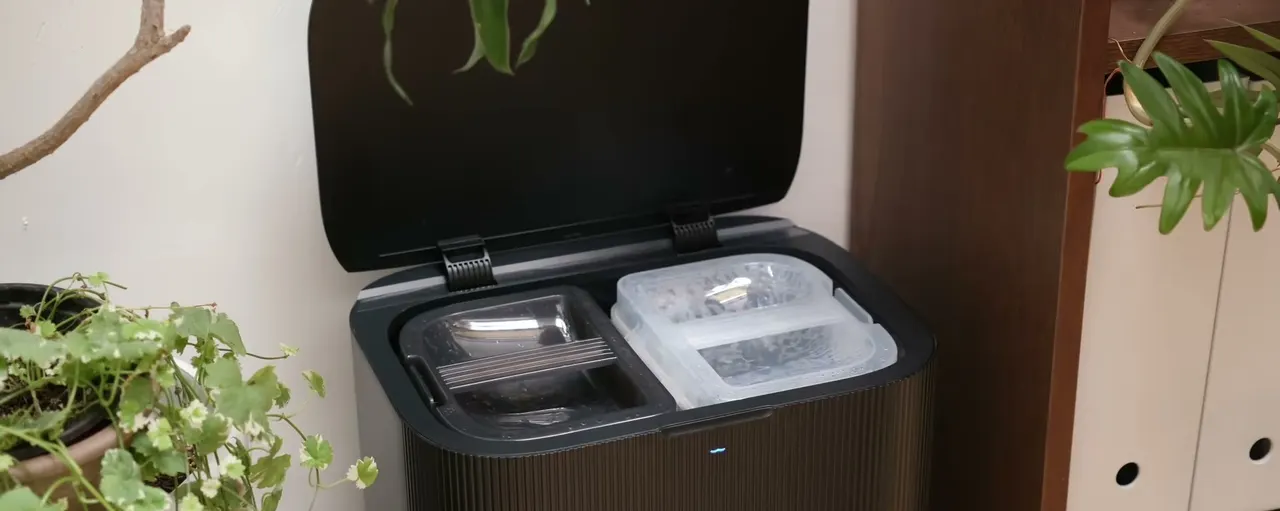
The dock does the daily dirty work: it empties the bin, washes the mop pads with water heated up to 80°C, and dries them. Testers describe pads coming out clean enough that one owner has not replaced a pad since purchase, and the fixed wash tray uses a spray self-cleaning design that one tester compared to a dishwasher; after weeks of deliberately skipping dock cleaning, residue on the tray stayed far below what removable-tray designs collect. In a normal household, expect to refill clean water and drain the dirty tank about once a week, and a deodorizing module in the dirty-water tank means it does not smell between empties, even in hot weather.
Refill and draining run about once a week; the open dock shows both tanks side by side.
The routine is small but not zero. The dock's base plate collects muddy residue and wants a manual wipe about every two weeks, and one tester noted a faint damp smell from the dock after long use in a poorly ventilated room. Night noise deserves planning too: the mop-drying cycle registered about 50 dB in one tester's quiet home, audible enough that parking the dock next to a bedroom is a bad idea. Daytime cleaning noise stayed in an acceptable range for that tester.
Two smaller friction points came from owner reports. The roller brush does not unscrew from its holder and has to be pulled off with force when it eventually needs replacing, and one owner who asked customer support how to detach it was sent the same how-to video twice with no real answer. The voice assistant also drew a note for responding slowly to wake-up commands, though app control itself worked normally in tester runs.
Evidence log
Field captures — Dreame X50 Ultra
12 frames
FIG. 01The retractable legs lift the chassis over thresholds that stop ordinary robots.
FIG. 02The roller does not unscrew from its holder; it pulls off with force.
FIG. 03One tester's app routine runs the carpet first each run, mop pads detached at the dock.
FIG. 04With the turret dropped into the body, it cleans under cabinets this low.
FIG. 05Legs at full extension — the lift that carries it over door tracks.
FIG. 06Chassis raised on its extended legs, it climbs the raised crossings most robots refuse.
FIG. 07This sensor array is why it routed around pet messes instead of spreading them.
FIG. 09After a week in a hair-heavy bedroom, testers found nothing wrapped on this roller.
FIG. 10The dual roller pairs rubber and bristle brushes to route long hair into the airflow.
FIG. 11It now cleans the balcony side of a raised track where earlier robots always failed.
FIG. 12The dock empties the bin, washes the pads with up to 80°C water, and dries them.
The Verification Log
Every scenario below comes from independent tester runs or owner reports we cross-checked, and the wording stays qualitative because the sources report observations, not instrumented readings.
Scenario
What testers saw
Bathroom threshold, about 2 cm
Crossed on the first try, no hesitation
Raised sliding-door track to a balcony
Recognized the step, lifted the chassis, and crossed where earlier robots failed
Tall, narrow test blocks (4 to 5 cm)
Gave up and retreated rather than climbing
Low cot, cabinets, and a wheeled cart
Turret retracted and the robot cleaned underneath
Bedroom with heavy hair shedding, one week
No hair wrapped on the roller brush
Colored threads laid on the floor
Strands fed straight into the suction inlet
Wall edges and cabinet toe-kicks
About 1 mm of un-cleaned gap left along walls
Dried soy sauce and ketchup
Cleared in mop mode during demonstrations
Dock wash tray after weeks without cleaning
Far less residue than removable-tray designs
Mop drying at night
About 50 dB, too loud for a dock beside a bedroom
Who Should Skip It
The X50 Ultra earns its keep in a specific house: more than one level of flooring separated by thresholds or door tracks, low-clearance beds and cabinets, hard floors with pets or long-haired people, and an owner who wants the dock to handle the daily routine. If your home is a single level with no tall thresholds and standard-height furniture, the climbing legs and the dropping turret solve problems you do not have, and simpler robots cover the same daily pickup without the extra mechanism.
The bigger reason to wait is durability. This robot has more moving parts than a standard robot, and the sources we track contain no wear pattern data on the leg mechanism, the brush system, or the battery; its Long-haul reliability score is the weakest of its four dimensions for exactly that reason. Because the long-term evidence is thin, we weigh it differently than the cleaning evidence, and you can read how we verify cross-checked reports for the details. Buyers who want a proven track record should wait for a year of owner feedback, and our other robot vacuum reviews cover machines with longer records behind them. Early adopters who accept that trade get one of the strongest cleaning packages we have scored; everyone else is paying for hardware whose failure mode is unknown.
Frequently Asked Questions
How does it handle rugs versus hard floors?
Testers report the dual rubber-and-bristle roller handling both surfaces without drama, and the mop system is designed around rugs: one tester set the carpet to clean first each run and watched the robot detach its mop pads at the dock, finish the carpet, then reattach them for the hard floors. Damp pads never touch rug fibers in that routine.
Is the dock loud at night?
It can be. One tester registered the mop-drying cycle at about 50 dB in a quiet home at night and warned against parking the dock next to a bedroom. Daytime cleaning noise stayed in an acceptable range in the same reports, so placement, not the robot itself, is the decision to make.
What upkeep does it still ask for?
Plan on refilling the clean water and draining the dirty tank about once a week, and wiping the dock's base plate about every two weeks, based on tester households. The wash tray is fixed in place but self-rinses with a spray system, and one tester found far less residue on it than on removable trays after weeks of neglect. When the roller brush eventually wears out, note that it pulls off its holder with force rather than unscrewing.
How well does it avoid obstacles like cables and pet messes?
In tester runs the robot avoided common household items well, and one tester found it recognized pet vomit most of the time and routed around it instead of spreading it. The same tester did catch its stain detection mistaking wood grain for a dirty spot and skipping that patch, so an occasional missed strip on heavily grained floors is possible.
How much floor can it cover on one charge?
One tester ran a full 150 m² home layout in standard mode and the robot finished without needing a mid-run recharge. Larger homes or higher suction settings will lean on its recharge-and-resume behavior, which the dock handles automatically.