Ecovacs Deebot T30S Review: Strong Scheduled Cleaning for Hard-Floor Pet Homes, but Reliability Falls Short
By VacuumWiz Editorial Team · Published Oct 12, 2026 · Updated Oct 13, 2026 · 10 min read
Cross-checked tester runs and owner reports on the Ecovacs Deebot T30S: strong scheduled cleaning and a self-servicing dock, against Wi-Fi dropouts and a battery that fades.
VacuumWiz Score
5.8/ 10
Ecovacs Deebot T30S
Four dimensions
Cleaning performance7
Ease of use6
Everyday upkeep6
Long-haul reliability4
Verified configuration
Suction
11000 Pa
Runtime
180 min
Verdict
This is a capable vacuum and mop combo whose dock washes, dries and empties so the floor work stays mostly hands-off. The trade-off is reliability: repeated reports of Wi-Fi dropouts, dirty-water drainage errors and a battery that fades make it a machine you maintain and troubleshoot, not one you forget about.
In the homes where owners run the Ecovacs Deebot T30S on a schedule, the daily routine barely involves the owner: the robot vacuums and mops after everyone leaves, and its dock washes the mop pads, dries them with hot air, and empties the bin without being asked. Independent testers put the same jobs on camera, and their runs back the core promise, with real pickup on tile and wood and edge work many round robots miss. What the same reports make just as clear is where this machine fails, and it is not the cleaning. The repeating trouble sits between robot, dock, and cloud: Wi-Fi connections that drop and demand a full re-setup, a dock water path that throws drainage errors, and a battery that fades before the brushes wear out.
Verified unit
Ecovacs Deebot T30S
Robot Vacuums
A pet-owning household with mostly hard floors and some rugs that wants a robot to vacuum, mop and service its own dock on a schedule, and is comfortable managing an app and the occasional dock cleanup.
As an Amazon Associate, we earn from qualifying purchases — at no extra cost to you. Learn more
Works well
The OMNI dock handles mop washing, hot-air drying and self-emptying on its own, which removes nearly all of the daily upkeep owners describe hating on other robots.
It runs noticeably quieter than the Roomba and Eufy units owners came from, so scheduled runs are easy to live with.
The app offers deep configuration with schedules, zones and no-go areas, and the robot links into Alexa and Home Assistant for those who want smart-home control.
Watch out
Wi-Fi connectivity is the repeating failure: owners running multiple units report every one of them permanently dropping offline and requiring the full setup process again, sometimes several times a year.
The dock's dirty-water path causes trouble, with errors when the tray fails to drain into the tank and standing water in the station that turns smelly without frequent cleaning.
Battery runtime fades into a clear wear pattern, so plan on the pack being the part that ages first rather than the brushes.
The mop plates lose their grip over time and mop pads stop attaching securely, and replacement mopping parts can be hard to source.
Edge and corner work


Edge cleaning is the aspect this robot vacuum is built around, and the design choice is unusual: one mop pad rides permanently past the body edge instead of swinging out only when an obstacle is detected. Testers who have run both layouts point out what that avoids, since a retracting arm can fail to extend and miss the wall, or fail to retract and clip furniture. In a corridor run with obstacles placed along it, one tester watched the T30S clean long strips along walls and door frames and work precisely around irregularly placed table legs, and another filmed it tracing right-angle walls and chair legs with the pad pressing in as it went.
A swing-out side brush covers the dry side of the same job. Along walls the robot kicks a small leg out toward the baseboard, and in one tester's dust-zone run edge pickup was visibly quick, including full coverage of a lipstick strip laid at the wall edge. The side effect showed up in the same footage: because the leg spreads wide, the robot left thin uncleaned gaps in the middle of its own path on several passes, so the edges win while the middle occasionally wants a second run.
The pad rides out past the body edge, so the baseboard strip gets mopped in the same pass.Instead of detouring around chair legs, it hugs them; the extended pad is the blue ring against the leg.
Pickup and hair
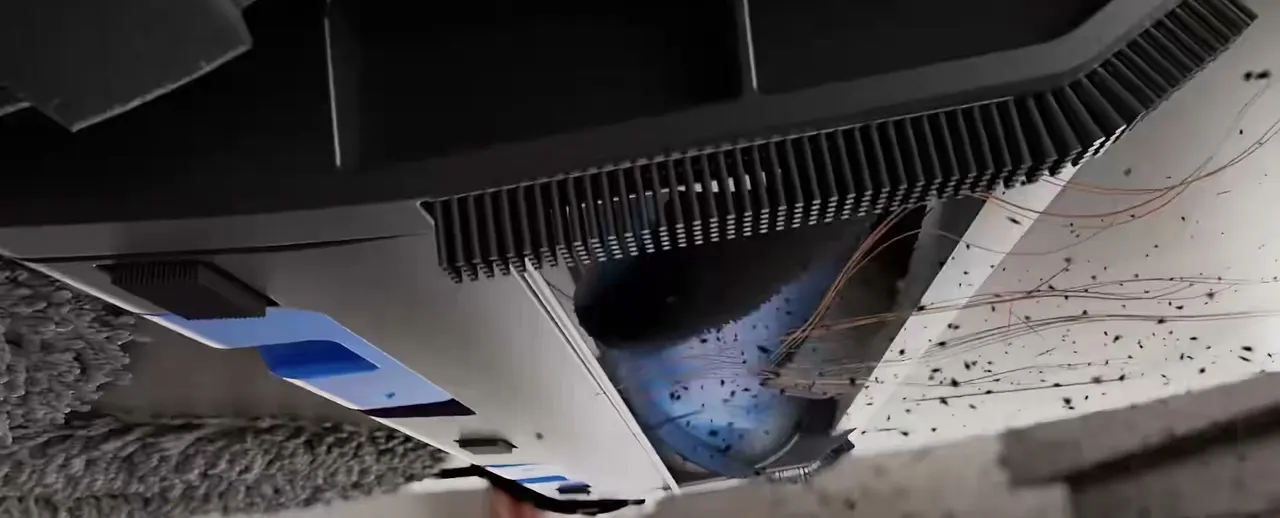
The listing rates suction at 11,000 Pa, and the design story Ecovacs tells is mostly about hair: offset comb teeth along the intake are said to straighten strands before they can wrap the roller, with a V-shaped brush pressing close to the floor. That is the manufacturer's account, and the observed record is thinner and less flattering. After one tester's hair run, strands came up wrapped tightly around the main brush, the exact failure the comb layout is meant to prevent, so we would not buy this machine for the anti-tangle claim alone.
Everyday pickup on hard floors is adequate for the scheduled crumbs-and-grit work this robot is for, but one comparison run found its limits with light debris. On a stretch scattered with cat litter and kibble it flung the light particles around more than any other robot in that test, sunflower seed shells were still on the track after its passes, and the weighed leftovers came out heavier than most of the field. Fine daily dust and hair on tile and wood are not the problem; a feeding station that spills kibble every morning might be.
Ecovacs credits the comb teeth along the intake for keeping hair off the roller.
Mopping on hard floors
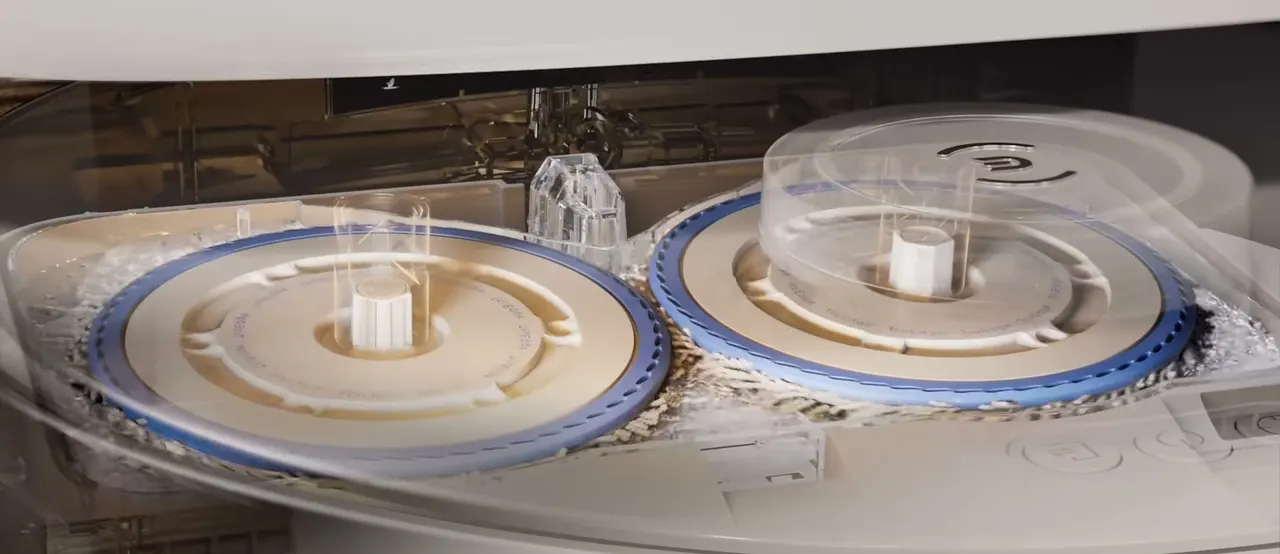
The mopping system has one idea testers could watch working: when the robot judges a spot heavily soiled on a first pass, it goes back to the dock, re-washes the pads, and re-mops the area until it comes clean. The dock side of that loop washes the pads in hot water and dries them with hot air, which owners credit for pads that do not smell between runs. When the robot detects carpet, the pads lift away by design, so a home with both hard floors and rugs does not end up with damp rugs.
The limits show up on stubborn, sticky messes. In one tester's wet-mess course the robot covered a lipstick strip at the wall edge but could not mop it off, judged a single pass sufficient in auto mode, and left visible talc marks in the dense dust zone, and the same tester watched it carry some debris onto the carpeted section. That is one run rather than a pattern, so we file it as a caution rather than a settled verdict, the same bar described under how we verify. Dried-on and sticky messes are better thought of as jobs the T30S improves rather than finishes.
The pads come back carrying real grime, which is what the dock's hot wash is for.
Dock routine and upkeep

The dock is the strongest part of the ownership story. It washes the mop pads with hot water, dries them with hot air, and empties the onboard bin into a bag Ecovacs rates for up to 90 days between changes, which owners describe as removing nearly all the daily upkeep they hated on earlier robots. The hardware is considerate in small ways too: the clean-water tank is transparent and sits up front so you can see at a glance when it needs a refill, one tester noted the two tanks seat firmly enough that a cat is unlikely to knock them over, and the tank version stands about 48 cm tall, short for a wash-and-empty station.
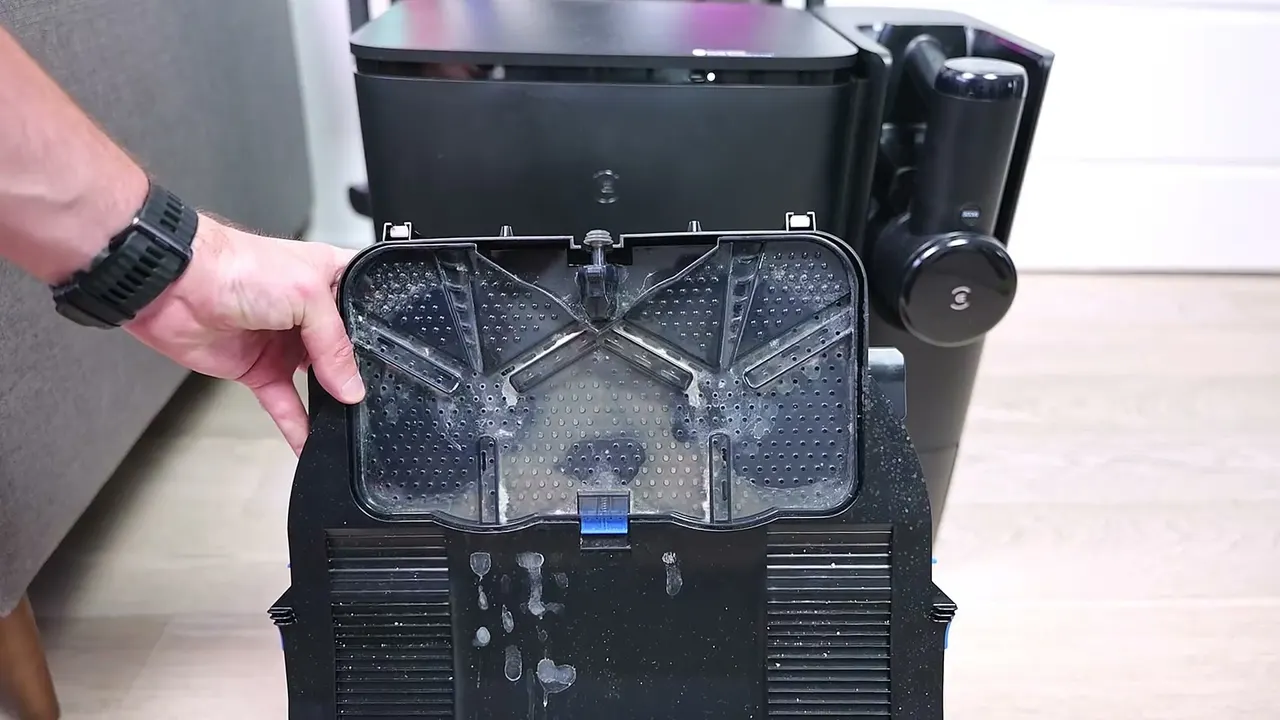
The catch is that the dock runs a chore list of its own, and owners are blunt about it. The dirty-water path is the repeating failure: the wash tray can fail to drain into the tank and throws errors, and standing water left in the station turns smelly without frequent cleaning. One tester did find the dock's modules pull straight out from the front, which makes that cleanup easier, but it is still a routine. The honest summary is that the T30S automates the floor work and hands you a smaller job at the dock instead, a rinse-and-check habit rather than daily pad washing.
The dust bag is the consumable with the longest interval; here it hangs half out of its bay.When the dock itself needs cleaning, the wash tray lifts out; here it comes free of the bay with water still on it.
Evidence log
Field captures — Ecovacs Deebot T30S
8 frames
FIG. 01Light debris is where pickup fades: one run flung litter and left seed shells behind.
FIG. 02It steers around clutter, but soft items like slippers still deserve a scan before a run.
FIG. 03It hugs chair legs and works precisely around them rather than detouring wide.
FIG. 04Edge cleaning is the aspect this robot is built around.
FIG. 05Edge strips get mopped because one pad always works out past the body edge.
FIG. 06The dock handles pad washing, hot-air drying, and bin emptying on its own.
FIG. 07The pad that always rides past the body edge reaches into the door track here.
FIG. 08Owners say the hot wash keeps these pads from smelling between runs.
App, voice, and scheduling
Day-to-day control is a genuine strength when the connection holds. The app carries schedules, room zones, and no-go areas with deep per-run settings, and the robot also answers to voice commands, which one tester demonstrated working with no internet connection at all. Owners who want smart-home control get Alexa and Home Assistant links, phone widgets can start a run without opening the app, and owners who switched from other robots describe the T30S as noticeably quieter, which makes scheduled runs easy to live with. Mapping is fast and mostly accurate, with one quirk owners repeat: the lidar misreads glass sliding doors and invents phantom rooms, which they fix by drawing no-go zones over the bad spots.
The failure that dominates owner reports is connectivity itself. Households running more than one unit describe every one of them dropping permanently offline and needing the full setup process again, sometimes several times a year. Because the app side is cloud dependent, a dropped connection kills remote control and the smart-home links until you redo setup, though the robot itself keeps its cleaning schedule and its offline voice control through the outage.
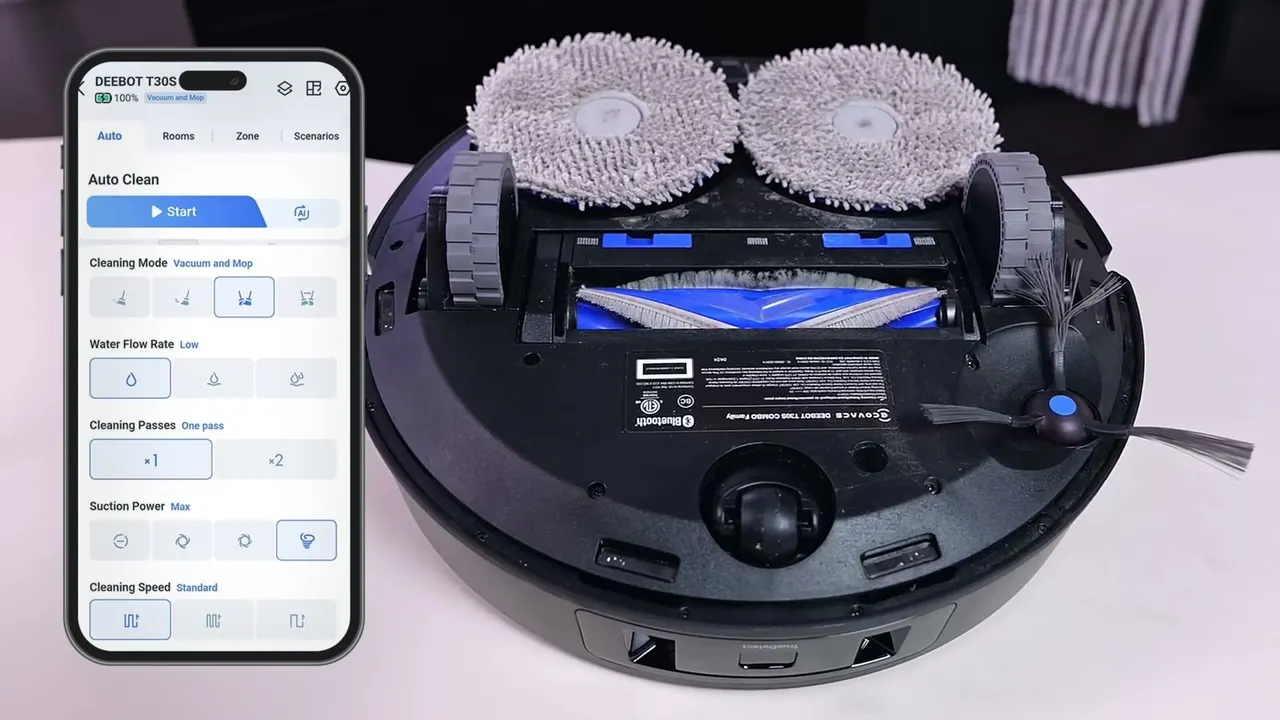
Suction and water flow are per-run settings in the app; the phone next to the flipped robot shows that screen.
Verification log
The table below condenses the runs and owner reports we cross-checked. Wording stays qualitative because the sources report observations rather than instrumented readings, and rows follow the order the scenarios appear above.
Scenario
What testers saw
Edge and corner cleaning
Mop pad rides extended past the body; walls, door frames, and chair legs cleaned close; the wide side brush can leave thin gaps mid-path
Hair pickup
Comb-and-roller layout is claimed to stop wrapping; after one tester's hair run, strands were wrapped tight on the brush
Light debris on hard floor
Daily dust and grit clear on schedule; one run flung litter and kibble and left seed shells behind
Sticky and dried messes
Re-washes and re-mops spots it flags as dirty; a lipstick smear at the wall edge stayed after the pass
Dock self-service
Hot-water pad wash, hot-air drying, and self-emptying run unattended; drainage errors and standing water need a regular rinse
Connectivity and app
Schedules, zones, and offline voice control work well; repeated Wi-Fi dropouts force a full re-setup
Who should skip it
None of this makes the T30S a bad buy for the household it suits: a pet home with mostly hard floors and some rugs that wants scheduled vacuum-and-mop runs and a dock that services itself, and is comfortable managing an app. Skip it if what you want is a robot you never think about. Its pattern in owner reports is a machine you maintain and troubleshoot, with Wi-Fi that drops and demands re-setup and a dock tray that needs rinsing before it smells. Buyers who need solid behavior offline, or who will never open an app after day one, have steadier options in this category. Homes that are mostly carpet should also look elsewhere, not because the T30S failed there but because the runs we could cross-check are almost all hard floors; the ground covered in our Roborock Qrevo Curv review is closer to that brief.
The long-haul picture is where this machine is weakest, and it deserves plain language. Owners describe a battery that fades into a clear wear pattern, so the pack looks like the part that ages first, not the brushes. The mop plates lose their grip over time until pads stop attaching securely, and replacement mopping parts can be hard to source. Add the recurring connection failures, and the T30S reads as a strong cleaner wrapped in a fragile support structure, which is exactly the trade-off a buyer should accept on purpose rather than discover later.
Frequently Asked Questions
Can the T30S keep its schedule without the cloud?
Mostly yes. The robot keeps running its cleaning schedule through an outage, and one tester demonstrated onboard voice commands working with no internet connection at all. What drops with the connection is the app side: remote control, map changes, and the Alexa and Home Assistant links stay dark until you set it up again.
Is it a good pick for homes with carpet?
The pads lift when the robot detects carpet, so rugs do not get mopped, but the runs we could cross-check are almost all hard-floor work with a few rugs alongside. One tester did watch it carry debris onto a carpeted section mid-run. We would buy it for hard floors with some rugs, not for a mostly carpeted home.
How much work does the dock really save?
The dock washes the pads in hot water, dries them with hot air, and empties the bin into a bag rated for up to 90 days, so daily floor upkeep is close to zero. What remains is a dock-side routine: owners report drainage errors and standing water in the tray that turns smelly, so plan on a regular rinse rather than no maintenance at all.
Will it steer around pet mess and clutter?
Owners report it steering around a dog accident rather than spreading it, with the caveat that detection works best in well-lit rooms, and one tester watched it recognize a transparent glass cup. It is not flawless, since the same run caught it nudging slippers, so soft floor clutter still deserves a quick scan before a scheduled run.
Does the battery cover a whole floor in one run?
The listing rates runtime at 180 minutes, and owners describe single sessions covering the main living areas of a home, with the dock topping up between zones if a job runs long. Capacity is not the concern; the wear pattern is. Owners point to the battery as the part that fades first, so expect runtime to shrink before anything else does.