Roborock Qrevo Curv Review: Strong Pickup and a Low-Touch Dock for Hard-Floor Pet Homes
By VacuumWiz Editorial Team · Published Oct 12, 2026 · Updated Oct 13, 2026 · 8 min read
Testers and owners ran the Roborock Qrevo Curv in hard-floor pet homes: strong pickup and a low-touch dock, weighed against carpet limits and a few known wear parts.
VacuumWiz Score
7.5/ 10
Roborock Qrevo Curv
Four dimensions
Cleaning performance9
Ease of use7
Everyday upkeep8
Long-haul reliability6
Verified configuration
Suction
18500 Pa
Verdict
The vacuuming and mopping performance holds up across hard floors and low-pile rugs, and the dock handles mop washing, drying, and dust emptying with little day-to-day input. The trade-off is a small water tank that needs frequent refills on bigger or daily-mopped homes, plus a durability question mark around the extending mop arm that Roborock will not sell parts for.
For a hard-floor pet home, the promise of a robot vacuum and mop is simple: the floors stay clean enough for bare feet, and the machine handles its own dirty work. Independent testers and owners handed the Roborock Qrevo Curv exactly that job, running it for weeks against cat litter, scattered kibble, and long hair along baseboards while the dock was left to wash, dry, and empty on its own. Across the reports we cross-checked, the verdict lands in the same place on both ends: pickup and edge coverage hold up, and the limits sit with high-pile carpet, low furniture, and a short list of wear parts.
Verified unit
Roborock Qrevo Curv
Robot Vacuums
A mostly hard-floor household with shedding pets or long hair that wants unattended vacuum-and-mop runs with edge coverage, and it suits mixed-floor homes with thresholds.
As an Amazon Associate, we earn from qualifying purchases — at no extra cost to you. Learn more
Works well
The extending mop reaches into corners and along edges, and owners with pets and long hair report floors that stay clean enough to walk barefoot between manual cleanings.
The dock automates the tedious parts: hot-water mop washing, warm-air drying, and dust emptying into a bag that goes weeks between changes.
Mapping is fast and detailed, and the app makes room scheduling, spot cleaning, and no-go zones easy to set up even for non-technical users.
Watch out
The extending mop arm is the wear item to watch: one owner who opened it found a small plastic gear stripped of its teeth, and Roborock offers no replacement gear or arm, only a paid repair service. Separate reports mention a cracked mop washing tray and mop pad adhesive letting go, though support replaced those parts quickly.
The clean water tank runs dry fast. Owners covering larger hard-floor areas or running high water settings report refilling every day or two, and the dirty tank develops a strong odor if it is not emptied and rinsed regularly.
Small-object avoidance is weaker than the sensor stack suggests. Cables, wires, and toys still get tangled or dragged, even though larger obstacles are handled well.
Everyday Pickup on Hard Floors
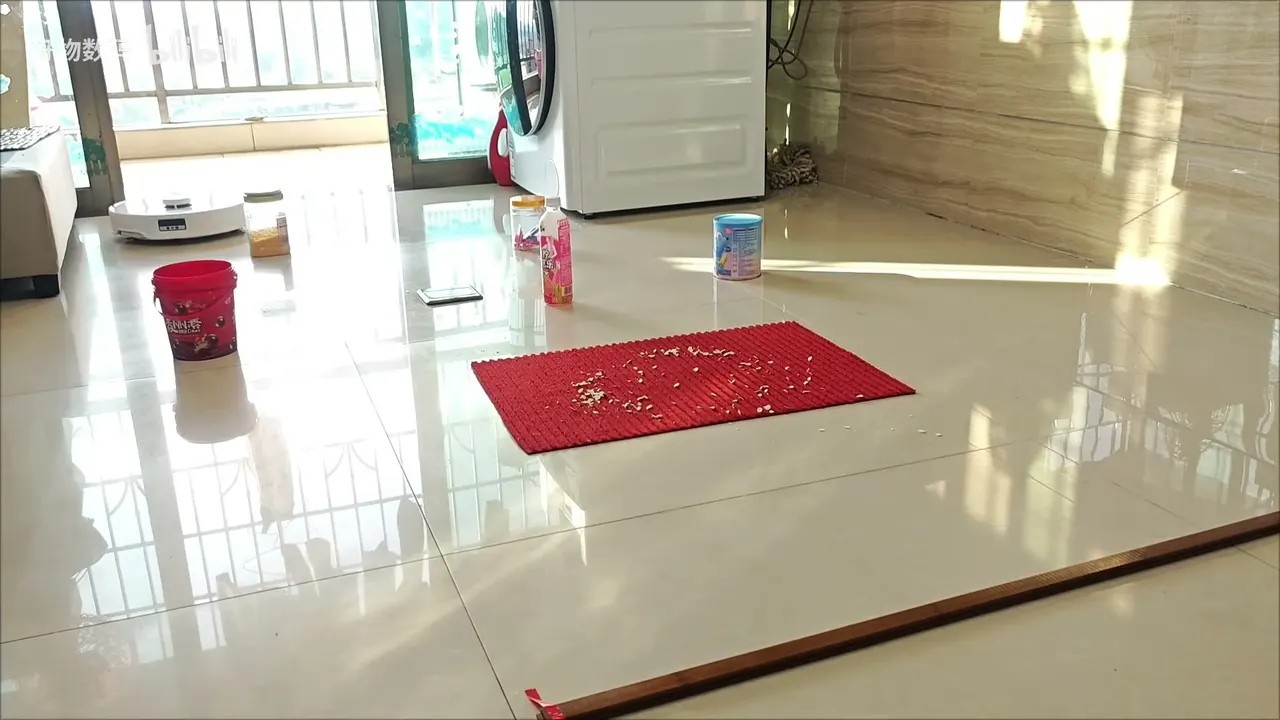
The Qrevo Curv is rated at 18,500 Pa of suction, and the reported runs line up with that figure. In tester kitchens, scattered debris (food crumbs, seed shells, cat litter) cleared wherever the robot passed, with no missed patches or obvious suction drop in standard mode. Owners describe the same pattern at home: one reported a dining area that stayed clean despite sticky rice hitting the floor constantly, and another watched cat litter and kibble disappear in a single full pass.
Pet hair is the other half of the daily load, and it is handled well. One tester ran it against long, short, dry, and clumped hair and came away impressed with the pickup, and an owner with a shedding cat reported no hair residue left on the floor after runs. The misses that did show up were edge cases rather than patterns: an old piece of litter stuck to a balcony floor survived one owner's run, and a single stray pellet near the cat bed made it through another.
In tester runs, scattered debris on hard floors cleared in single passes; the red mat holds the test scatter.
Edge and Corner Coverage
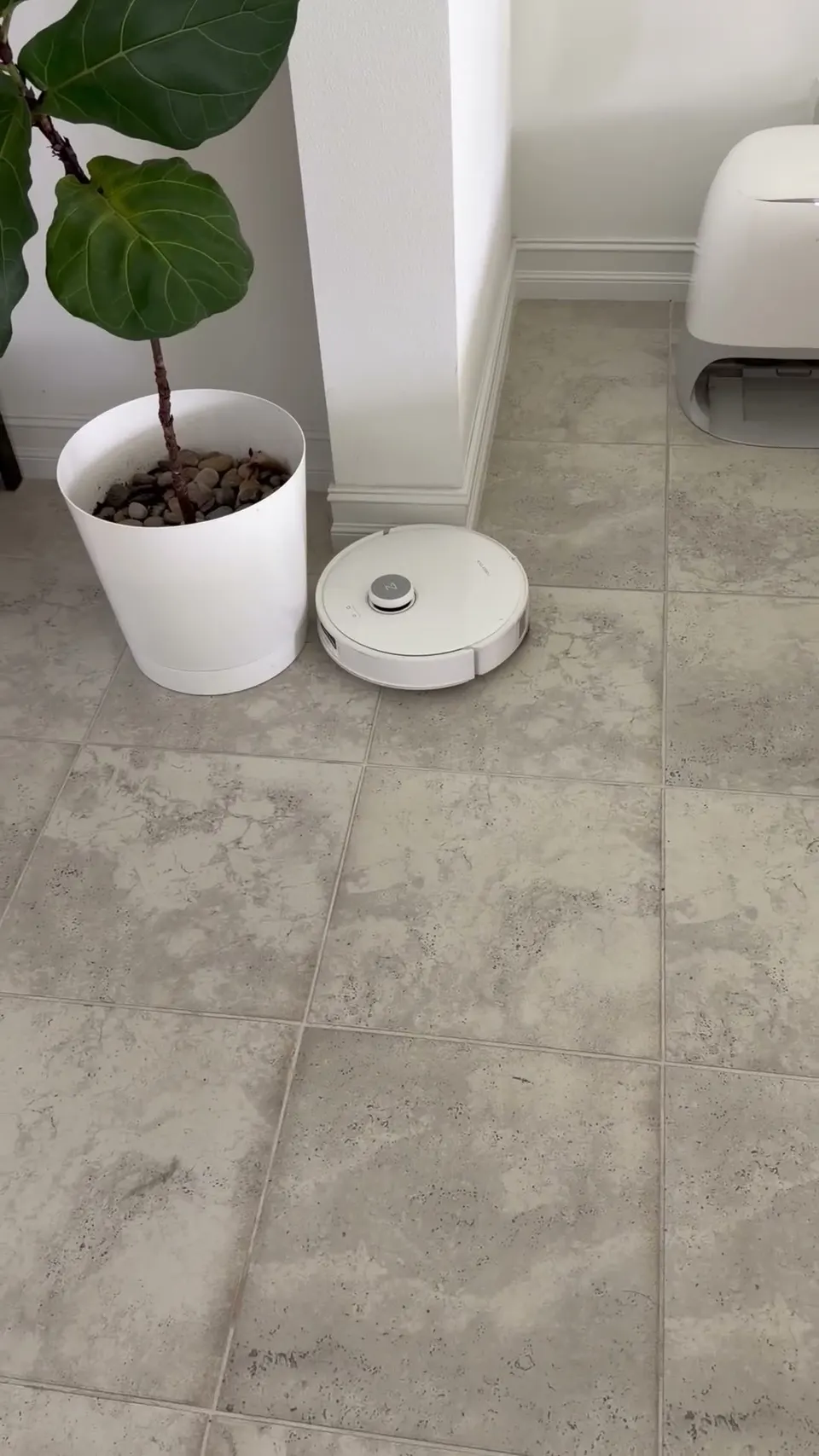
Edge coverage is where this robot separates itself from the round-robot norm. The side brush rides on an extending mechanical arm, and testers watched it sweep debris out of right-angle corners and along wall edges that round robots usually leave behind; along straight edges it cleans nearly flush. The mop reaches outward too, and owners with pets report the strip along baseboards staying clean between manual cleanings.
The one consistent caveat is the innermost corner. In one tester's edge run, pen marks along the baseboard came off except for a small strip at the deepest point, and testers note the mop can still miss a patch right at the corner, a limitation they describe as common to every robot of this form. Set against the usual state of robot edge cleaning, that is a short list of complaints.
The extending side brush is built for spots like this; the robot sits beside a wall corner and plant.
Mopping and Rug Handling
On hard floors the mopping holds up for daily film and fresh spills. One tester found that large pooled stains are recognized and trigger an automatic re-wash and re-mop, and owners running the robot through kitchen traffic report floors that stay clean enough to walk barefoot. The recurring complaint is water marks: even with the water level set to minimum, testers report the mop leaving relatively heavy water marks behind, and one owner with glossy glazed tile warns that similar floors will show them most. If your home is mostly matte tile or sealed wood it is a smaller issue, and if every tile gleams it is worth factoring in before you buy; claims whose weight changes by home are exactly what we cross-check in our verification process. Homes that would rather do one guided pass themselves can look at a hard-floor vacuum-and-wash we also cross-checked.
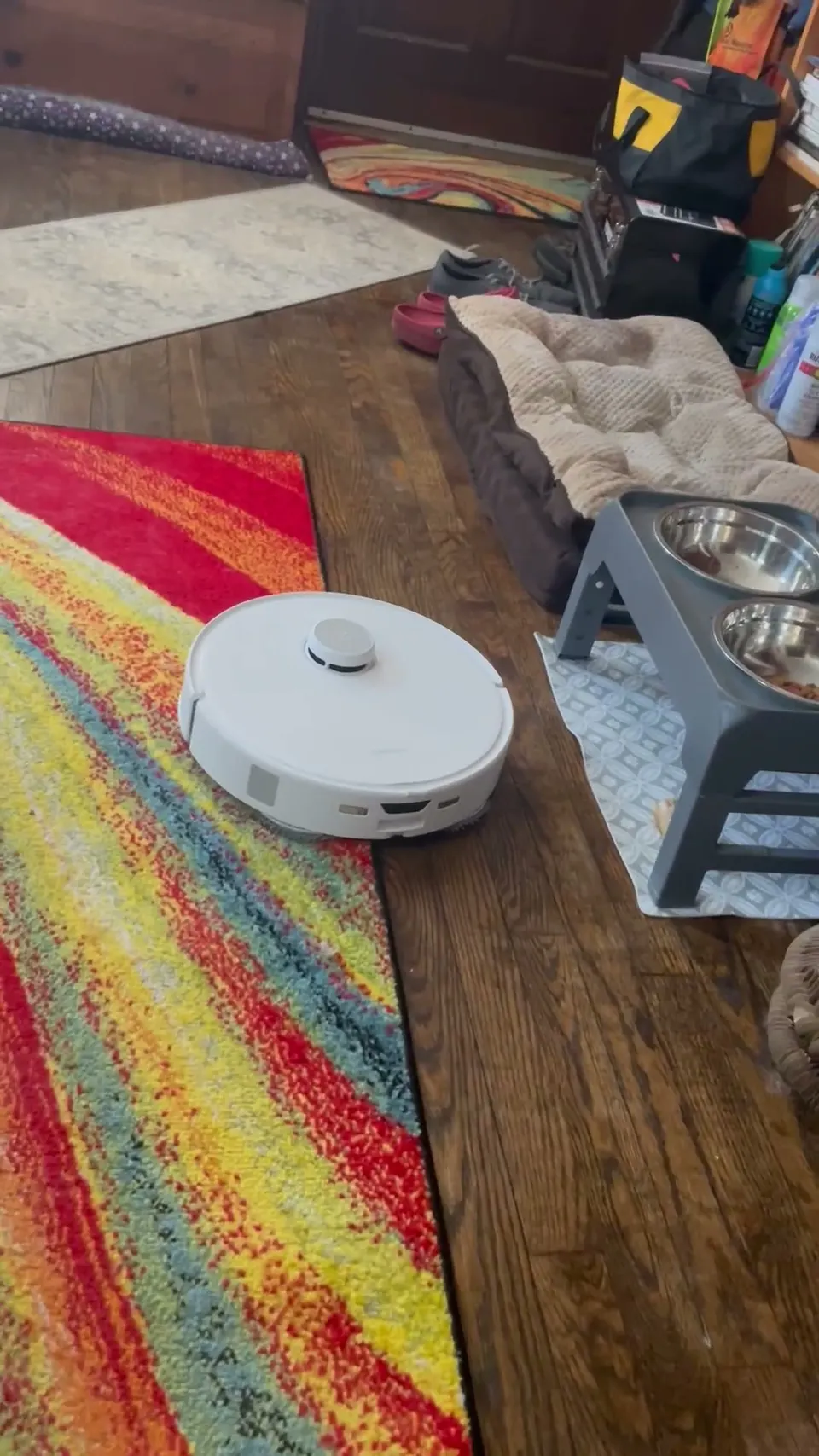
Carpet handling is smarter than average. When the robot detects a rug it lifts the mop pads and vacuums only, and testers confirmed the behavior on low-pile rugs and kitchen mats. The limits show up on high-pile carpet, where owners report acceptable cleaning but visible drag marks from the side brush. That trade-off is why we point mostly carpeted homes toward a vacuum-first machine we verified for pet hair instead.
On rugs the mop pads lift and the robot vacuums only; here it sits on a striped area rug.
Dock and Brush Upkeep
Upkeep is the dimension owners praise most, and it is mostly earned. The dock washes the mop pads in 75°C water, dries them for about three hours, and empties the robot's bin into a 2.5-liter bag that keeps dry debris separate from the wastewater. One owner reported rinsing the wash module twice in over two months with the dust bag still nowhere near full, and testers found the pads coming out clean and dry to the touch. The anti-tangle brush system holds up too: after two months in a home with cats and heavy human hair shedding, one owner's main brush carried dust but essentially no wrapped hair.
The routine that remains is small but real. The clean water tank is compact, so daily mopping means a refill roughly every two days, while one owner's lighter twice-a-week schedule stretched a tank across the week; a red light on the dock flags the refill either way. Fine residue settles on the wash tray and inside the dock over time, so the tray pulls out for an occasional rinse, and owners note the cleaning solution has to be added by hand rather than dosed automatically. One tester also found hair wrapping on one of the two rollers under heavy stress tests, with a few strands working into the axle, so zero-tangle in practice means far less wrap rather than none.
Evidence log
Field captures — Roborock Qrevo Curv
6 frames
FIG. 01Water marks are the mop's recurring complaint: glossy tile shows the wet trail it leaves behind.
FIG. 02On rugs the mop pads lift and it vacuums only; testers confirmed this on low-pile rugs and mats.
FIG. 03It climbs onto thick rugs, but high-pile carpet is where this robot's cleaning limits show.
FIG. 04Pickup on hard floors clears in one pass; the misses are strays like the fluff at the rug edge.
FIG. 05The dock washes the mop pads, dries them, and empties the bin; upkeep is what owners praise most.
FIG. 06Left: the mop pads after a dirty run. Right: the same pads after the dock's wash, clean and dry to the touch.
Test Run Log
Scenario
What testers saw
Crumbs, litter, and pet hair on hard floors
Cleared in single passes; an occasional stuck or stray piece survived
Long hair on floors and brushes
Strong pickup; brushes stayed nearly wrap-free over two months of owner use
Wall edges and right-angle corners
Extending side brush swept nearly flush; the mop can still miss the innermost corner patch
Rugs and carpet
Mop pads lift and the robot vacuums only; high-pile carpet showed side-brush drag marks
Stains and water marks on tile
Pooled fresh stains triggered re-washing; water marks visible even at minimum water level
Dock upkeep over two months
Pads washed and dried automatically; tray and tanks still ask for occasional manual rinsing
Who Should Skip It
This is the wrong robot for a mostly carpeted home. If more than half your floors are high-pile carpet, the drag marks and the mopping hardware you paid for work against you, and a strong vacuum without mopping gear fits that home better. It is also a poor match for homes full of low-slung furniture: the raised LiDAR turret on top means the robot cannot clear many sofas and some bed frames, and owners report it getting stuck under low coffee tables. Those spots need fencing off with no-go zones, which owners found easy to set up, since the first mapping pass finishes quickly and rooms can be named, scheduled, and sectioned off individually.
Obstacle avoidance is cautious to a fault, and small clutter beats it. Testers found the robot sometimes skips cleaning around obstacles entirely, and cables, wires, and small toys still get tangled or dragged. Tall thresholds are the other honest weakness: one owner's robot failed a balcony threshold while she was out and had to be rescued, and she now closes that area off for unattended runs. The rated 4 cm climbing figure describes step-style thresholds, and a 4 cm test obstacle stopped it in one trial.
The wear points are specific and worth weighing. The extending mop arm is the part to watch: one owner who opened it found a small plastic gear stripped of its teeth, and Roborock sells no replacement gear or arm, only a paid repair service. Separate owner reports mention a cracked mop washing tray and mop pad adhesive letting go, though support replaced those parts quickly. One comparison tester also judged the dock's plastics a step behind its rivals, with a risk of going brittle over years of hot-water washing. None of this is a failure verdict, and owners running the robot daily for months report it holding up, but it is why we rate its long-haul outlook behind its cleaning.
Frequently Asked Questions
Does the Qrevo Curv avoid cables and small toys?
Not reliably. Cables, wires, and small toys still get tangled or dragged in tester runs and owner homes, even though larger obstacles are handled well. If you run the robot while you are out, pick cords up first or fence problem areas off in the app.
How much daily work does the dock remove?
Most of it. The dock washes the mop pads in hot water, dries them, and empties the bin into a bag that owners change every few weeks to months. What remains is refilling the clean water tank every couple of days if you mop daily, rinsing the wash tray occasionally, and adding cleaning solution by hand.
What floors suit the Qrevo Curv best?
Hard floors and low-pile rugs, especially in homes with shedding pets or long hair. It lifts its mop pads on carpet and vacuums only, but high-pile carpet shows drag marks, so mostly carpeted homes should look at a vacuum-first machine instead.
How often do the water tanks need attention?
It depends on how much you mop. One owner's twice-a-week vacuum-and-mop routine stretched a tank across the week, while daily mopping meant a refill roughly every two days. A red light on the dock warns when the clean tank runs low, and the dirty tank wants regular emptying and rinsing to keep odors away.
Can it cross room thresholds?
It is rated for step-style thresholds up to 4 cm, but the real-world failures are on record. One owner's robot failed a balcony threshold and had to be rescued, and a 4 cm test obstacle stopped it in one trial. If your home has tall or sliding-door thresholds, fence them off before unattended runs.