
Verified unit
Narwal Freo Z Ultra
Robot Vacuums
As an Amazon Associate, we earn from qualifying purchases — at no extra cost to you. Learn more
Single review · Robot Vacuums
By VacuumWiz Editorial Team · Published Oct 15, 2026 · 9 min read
Testers and owners ran the Narwal Freo Z Ultra in hard-floor pet homes: standout mopping and obstacle avoidance, weighed against a self-empty dock that clogs on heavy pet hair.
VacuumWiz Score
7.0/ 10Narwal Freo Z Ultra
Four dimensions
Verified configuration
Running a robot vacuum overnight only works if two things hold: the machine has to stay quiet, and it cannot wedge itself on a cable at 2 a.m. Independent testers and owners put the Narwal Freo Z Ultra, a robot vacuum and mop rated at 12,000 Pa of suction, through exactly that kind of unattended duty in homes with shedding pets and tracked-in crumbs. Across the reports we cross-checked, the mopping and obstacle avoidance hold up as the real strengths, and the trade-off sits in a small onboard bin that struggles to hand heavy pet hair off to its dock.
Verified unit
Robot Vacuums
As an Amazon Associate, we earn from qualifying purchases — at no extra cost to you. Learn more
Most robot vacuums in this class lean on a single laser or camera, while the Freo Z Ultra carries two 136-degree ultra-wide cameras backed by a dual-chip setup, and testers say it recognizes more than 100 kinds of household objects. The behavior behind those numbers showed up in tester runs: in one cable test the robot stopped in front of a data cable instead of rolling over it, then turned and cleaned along the cable's length. Owners describe the same pattern at home with slippers, toys, and pet accidents, and the app even logs a photo of each object it worked around.
The limits are specific. In a fully dark room the robot switches on a small headlight, but one comparison tester found its avoidance still slips in darkness, so overnight schedules work best with some ambient light and a picked-up floor. In daylight it hugs furniture legs and curtain edges closely instead of giving them a wide berth, which is why coverage along chair legs and under tables tests well.
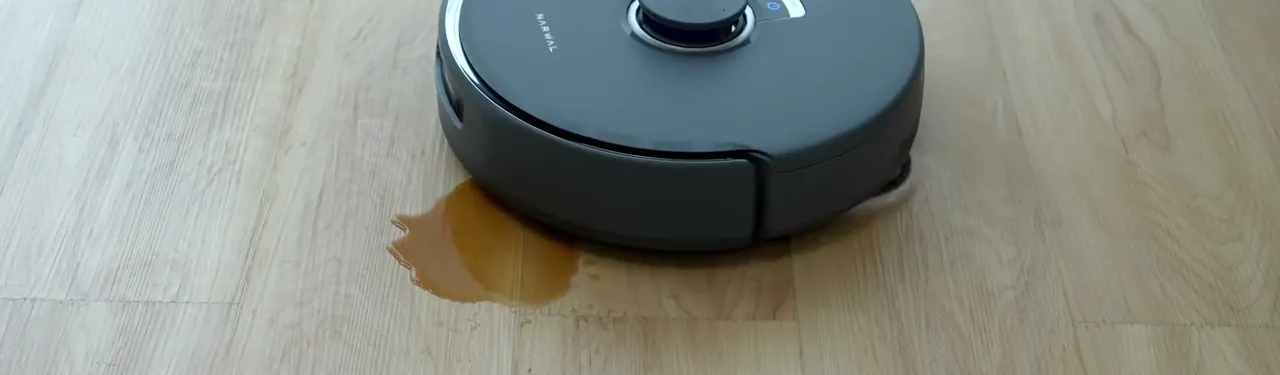
The mopping system is the reason to buy this robot. Two spinning pads scrub at up to 180 pressured strokes per minute, and the robot adjusts its down-pressure by floor type: about 12 N on tile, a gentler 700 g on sealed wood. When its cameras classify a mess as dry debris, the pads lift and it vacuums only; on a wet spill the roller brush lifts and it mops only, so liquid never reaches the dustbin.
Pooled spills get real attention. In tester runs the robot circled a large liquid patch from the outside in, went back to the dock to wash its pads mid-job, and returned to re-mop until it judged the area clean. One tester reported a days-old dried stain cleared in a single pass, and owners with wood and tile floors describe consistently clean results with almost no intervention.
Edge work is the honest weak point. Unlike rivals with extending mop arms, this robot works its way along walls by wiggling its rear, which is slower, and testers note it still misses a patch at right-angle corners; along straight wall edges the twisting motion can leave a wave-shaped residue line. One tester also noted the robot carries no onboard water tank, so on long mopping runs the pads dry as they work and the robot goes back and forth more often.


Daily pickup on hard floors matches the 12,000 Pa rating. Testers report crumbs, litter, and scattered debris clearing wherever the robot passes, and when it detects a pile of dry debris ahead it lifts the mop pads before working that area. Pet hair is the other half of the daily load, and it is handled by a conical roller brush that is wide at one end and narrow at the other, so hair slides toward the suction inlet instead of wrapping. In a household with long hair and a shedding cat, one owner found the roller genuinely wrap-free, and one tester ran 50 cm strands through it with the same result.
Zero-tangle does have a footnote. Under heavy stress tests a few strands can wind into the roller axle gaps, and the side brush picks up occasional wrapped hair, so in practice it means far less wrap, not none. Carpet is where the rating inflates: in one comparison run on carpet scattered with 10 grams of crushed peanuts at maximum suction, it cleared about 85%, on par with a rival flagship robot but behind a dedicated vacuum, and owners in carpet-heavy homes report keeping a second machine.
The dock does most of the dirty work in this system. After each run it dries the debris sitting in the robot's bin first, then transfers it into a 2.5-liter bag with UV sterilization, so wet and dry debris never sit together; one owner's bag went five months full of cat hair with no odor. The mop pads get a staged hot-water wash that runs hotter for grease and ends with a sanitizing rinse, followed by a quiet heated dry, and testers who watched the cycle for a month report the pads come out visibly clean. The emptying burst is loud for a few seconds, and a quiet mode drops the dock's collection noise by 7 dB for overnight runs.
The catch sits upstream of the dock. The onboard bin is small and its channel clogs on heavy pet hair, so in shedding-dog homes the self-empty cycle often fails and owners end up emptying the bin by hand, sometimes mid-run. A disposable bin liner softens the chore, since you swap it roughly quarterly instead of washing the bin, but households with heavy-shedding dogs should treat auto-empty as assistance, not a guarantee.
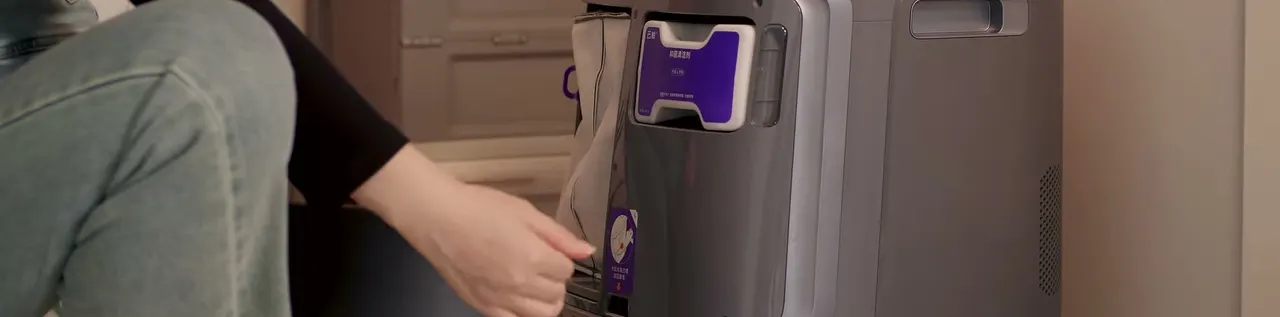
What remains for the owner is modest but real. The wash tray pulls out for a rinse that Narwal suggests every couple of weeks, and without the optional plumbing kit you refill the clean tank and empty the dirty one about once a week. Owner reports also mention occasional dock faults, including false empty-tank warnings, and support that stalls instead of replacing the unit; for durability calls like this we weigh long-term owner reports over launch-week impressions in our verification process. Set against that, one long-term owner reports five months of stable daily runs, so the record reads decent, not spotless.
Evidence log
| Scenario | What testers saw |
|---|---|
| Cables and small clutter | Stopped at a data cable, then cleaned along its length; recognized objects get logged in the app |
| Full darkness | Headlight switches on, but avoidance still slips compared with daylight runs |
| Pooled spills on hard floors | Mop-only mode, circled the patch from the outside in, washed pads mid-job, and re-mopped |
| Wall edges and corners | Rear-wiggle along walls is slower; a missed patch remains at right-angle corners |
| Long hair and pet hair | Conical roller stayed wrap-free in owner homes; a few strands can reach the axle under stress |
| Carpet with scattered debris | About 85% cleared at maximum suction in one comparison run, behind dedicated vacuums |
| Self-empty on heavy pet hair | Bin channel clogs, so owners empty the small onboard bin by hand, sometimes mid-run |
| Dock wash cycle | Pads come out visibly clean and dry; the tray still wants an occasional rinse |
This is the wrong robot for a mostly carpeted home. Carpet pickup trails dedicated vacuums, the mopping hardware you paid for sits idle, and owners in that situation report keeping a second machine anyway; a vacuum-first machine we verified for pet hair, like the one in this review, fits that home better. Homes with heavy-shedding dogs should also think twice if the appeal is fully automatic emptying, because the small bin and its narrow channel are the part of this system most likely to ask for your hands.
Two household setups deserve a pause as well. If several people need to run the robot from their own phones, the app allows only one signed-in device, room splits are restricted to wall-to-wall partitions, and owners report schedules occasionally dropping after a remap. And if your floors collect deep right-angle corners or you expect edge coverage on par with robots that carry extending mop arms, the rear-wiggle approach here leaves a visible gap; another robot vacuum and mop we cross-checked handles corners with an extending side brush instead. For hard-floor homes that want quiet, unattended overnight runs, none of these limits change the core case for it.
Yes, and it is one of the robot's verified strengths. In tester runs it stopped in front of a data cable instead of rolling over it, then cleaned along the cable's length, and owners report the same behavior with slippers, toys, and pet accidents. The app keeps a photo log of the objects it avoided, and the one caveat is darkness: avoidance slips in a fully dark room even with its headlight on.
One long-term owner reports at least two hours of combined vacuuming and mopping per charge, which covers a typical hard-floor home in one run. When the battery runs low mid-job, the robot returns to the dock on its own, recharges, and picks the job back up where it stopped.
The robot itself vacuums and mops quietly enough that owners run it while the household sleeps. The dock's emptying burst is loud but lasts only a few seconds, and a quiet mode drops that collection noise by 7 dB, so scheduling the emptying away from sleeping hours is easy.
The dust bag holds months of debris (one owner went five months with no odor), and the mop pads wash and dry themselves after every run. What remains is rinsing the wash tray every couple of weeks, swapping the disposable bin liner roughly quarterly, and, without the optional plumbing kit, refilling the clean tank and emptying the dirty one about weekly. Homes with heavy-shedding dogs should also expect to clear the small onboard bin by hand when the self-empty channel clogs.
Not as a main machine. It lifts its mop pads on carpet and vacuums only, but pickup trails dedicated vacuums, and owners in carpet-heavy homes report keeping a second vacuum. It earns its place in homes that are mostly hard flooring with area rugs.

Review · Robot Vacuums · Oct 2026 · 10 min read

Review · Robot Vacuums · Oct 2026 · 10 min read

Review · Robot Vacuums · Oct 2026 · 8 min read